
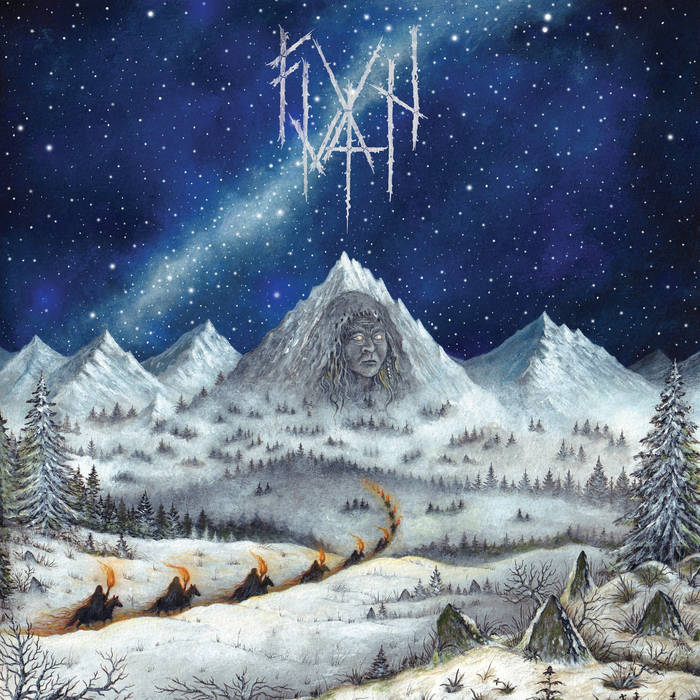
A glacial, ascendant monument of atmospheric black metal
With III, Fuath sharpens its identity into something both ancient and forward‑leaning. The album’s four long tracks form a single, frigid continuum — a study in how atmospheric black metal can remain raw while embracing a sense of grandeur. Andy Marshall’s approach here is not nostalgic imitation; it’s a deliberate refinement of the genre’s early DNA, sculpted with a modern ear for texture and scale.
The first thing that stands out on III is its structural discipline. Each track unfolds in extended arcs, built from tremolo‑driven harmonic layers that shift gradually rather than erupting into abrupt changes. This gives the album a sense of inevitability — like watching a storm form, crest, and dissipate.
The guitars dominate the landscape, not as a wall of noise but as a multi‑tiered harmonic lattice. Marshall uses chord voicings that stretch beyond the typical minor‑key tremolo patterns, weaving in open‑string drones and suspended intervals that create a cold, luminous resonance. The result is a sound that feels both glacial and strangely celestial.
The drums are intentionally set back in the mix, giving the music a windswept quality. Blast beats appear, but they’re used as propulsion rather than aggression; the real force of the album comes from the relentless forward motion of the riffs.
Marshall’s vocals remain distant, almost ritualistic. They function less as a narrative device and more as an additional layer of texture — a harsh, spectral presence echoing through the mix. This choice reinforces the album’s sense of scale: the voice is not the protagonist but a spirit moving through the landscape.
Track-by-Track Impressions
1. The Cailleach
A towering opener that stretches past the twelve‑minute mark. Built on cyclical tremolo motifs, it gradually thickens into a blizzard of harmonics. The pacing is hypnotic, and the final third introduces subtle melodic shifts that feel like light breaking through cloud cover.
2. Embers of the Fading Age
More rhythmically varied, with transitions between mid‑tempo atmospheric passages and sharper, frostbitten surges. The interplay between the guitars and the distant, echoing vocals gives this track a sense of ancient ritual.
3. Possessed by Starlight
The most luminous piece on the album. The melodic phrasing leans toward the cosmic, with riffs that shimmer rather than simply cut. It’s a moment of elevation — a cold, astral breath before the descent.
4. The Sluagh
The darkest and most narrative‑driven track. Dissonant chord shapes and slow‑burning tension give it a haunted, almost folkloric atmosphere. The closing minutes dissolve into bleak ambience, ending the album in a state of suspended frost.
The production walks a careful line:
– Raw enough to preserve the spirit of early black metal
– Clear enough to reveal the harmonic detail that defines Fuath’s sound
The guitars are the focal point, with the drums and vocals intentionally blurred into the periphery. This creates a sense of distance — as if the music is echoing across a frozen valley rather than being performed in a room.
III is Fuath’s most confident and expansive work to date. It captures the essence of atmospheric black metal — cold, immersive, and mythic — while pushing its harmonic language into more luminous territory. The album rewards deep listening, not for its complexity but for its patience, scale, and emotional austerity.
If the previous Fuath releases hinted at a vision, III is the moment that vision crystallizes.
A winter monument carved in sound.
Facebook: https://www.facebook.com/fuathmusic
Instagram: https://www.instagram.com/fuathmusic/
Bandcamp: https://fuath.bandcamp.com/album/iii
 BLACK METAL CULT